What Is the Minimum Damages Required for Patent Litigation Funding?
Patent litigation finance allows patent owners to pursue enforcement without paying litigation costs upfront. Litigation finance firms may invest millions of dollars to fund legal fees, expert witnesses, and other litigation expenses in exchange for a portion of the recovery.
However, litigation funders are highly selective. One of the most important factors investors consider is the potential damages value of the case. Understanding these thresholds helps patent owners determine if their opportunity is likely to attract investor interest.
Typical Minimum Damages for Patent Litigation Funding
Because patent litigation is capital-intensive, firms generally look for cases with substantial recovery potential.
-
The $20 Million Threshold: Many litigation funders prefer cases where estimated damages are at least $20 million or more.
-
Cost vs. Reward: This threshold exists because litigation often requires millions in legal fees and discovery. Investors must ensure the potential recovery justifies the high cost of entry.
-
Focus on ROI: While some smaller cases receive funding, most firms focus on opportunities where the expected recovery generates a meaningful return on investment (ROI).
Why Litigation Funders Prefer Large Cases
Pursuing a patent case through trial can cost several million dollars. Larger cases provide strategic advantages for the funder:
-
Risk Diversification: Higher potential damages can offset the inherent uncertainty of legal battles.
-
Return on Investment: Firms typically expect a specific multiple of their invested capital.
-
Settlement Leverage: Cases involving significant financial exposure often encourage defendants to enter earlier settlement discussions.
Because of these factors, investors prioritize enforcement opportunities involving large markets or widely adopted technologies.
How Damages Are Estimated in Patent Litigation
Damages are calculated using several industry-standard methods:
-
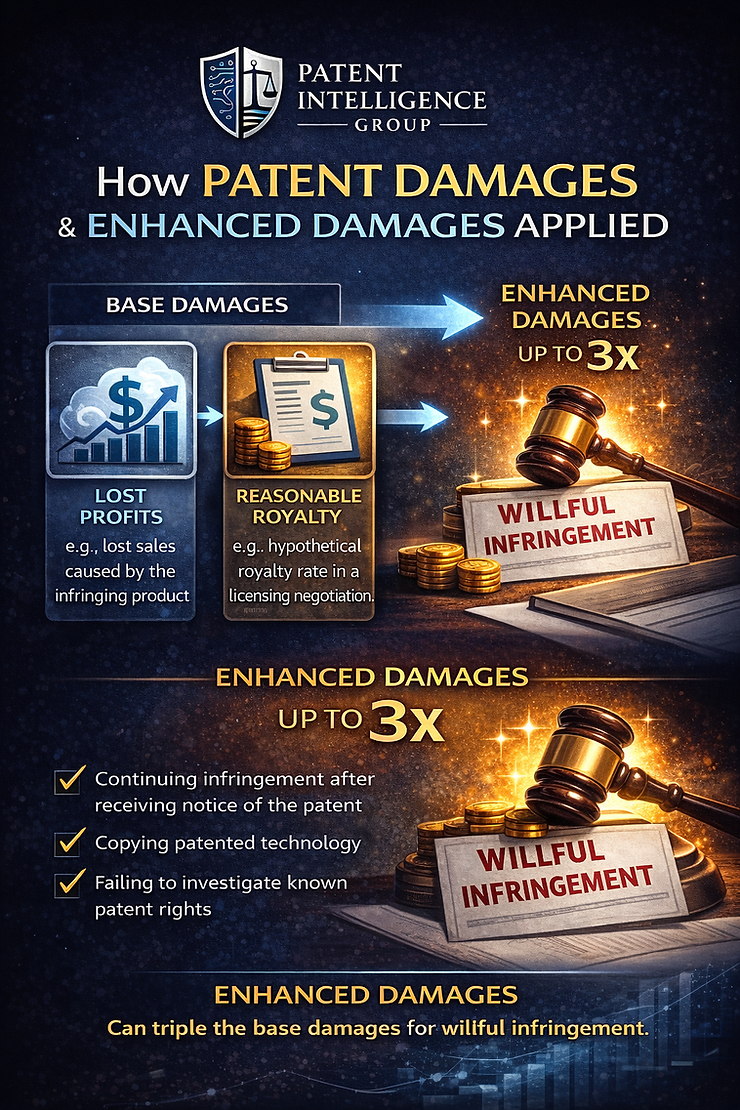
Reasonable Royalty: A royalty rate applied to the revenue generated by the accused products.
-
Lost Profits: Damages based on profits the patent owner would have earned if the infringement hadn’t occurred.
-
Market Share Analysis: Evaluating how the patented technology affects competition within the specific sector.
Early estimates often rely on the commercial impact of the technology and the total revenue of the products incorporating it.
Identifying High-Value Patent Cases
At Patent Intelligence Group, we developed the Patent Litigation Funding Readiness Framework™ to help patent owners evaluate their cases before approaching investors. This structured four-step process includes:
-
Infringer Landscape Report
-
Evidence-Backed Claim Chart Report
-
Litigation Viability Report
-
Investment Diligence Report
During the Litigation Viability Report stage, we determine whether the potential damages meet the $20 million threshold. If the damages appear too small, this analysis helps patent owners avoid unnecessary costs and the likelihood of a rejection from funding firms.
Why Early Damages Analysis Matters
Many patent owners approach funders without knowing if their case meets investor expectations. Conducting early analysis of market size, product revenue, and infringement exposure ensures you focus your efforts on cases with the strongest potential for investment.
Conclusion
Litigation finance firms carefully evaluate the economic potential of an opportunity before committing capital. Understanding that investors prefer cases exceeding $20 million is essential for any patent owner.
The Patent Litigation Funding Readiness Framework™ provides the market analysis, infringement evidence, and legal diligence needed to identify and prepare investor-ready opportunities.
Contact us today at info@patentintelligencegroup.com to see how we can help you achieve your goals.