Due Diligence. What It Is: A Complete Guide for Investors
When considering any significant business transaction, investment, or acquisition, understanding due diligence becomes essential for protecting your interests and making informed decisions. This investigative process serves as the foundation for evaluating risks, validating claims, and uncovering potential issues before committing resources. Whether you’re a private equity firm evaluating a target company, a litigation finance fund assessing patent portfolios, or an investor reviewing intellectual property assets, comprehensive due diligence separates successful investments from costly mistakes.
Understanding the Fundamental Definition
The concept of due diligence refers to the reasonable steps taken by a prudent person or organization to satisfy a legal requirement, especially in business or legal transactions. In practical terms, it represents the comprehensive investigation and analysis conducted before entering into an agreement or completing a transaction.
At its core, due diligence what is can be described as a systematic evaluation process. This investigation examines financial records, legal documents, operational procedures, and strategic assets to verify representations made by sellers or target companies. The depth and scope vary depending on transaction size, industry complexity, and specific risk factors.
Historical Context and Legal Significance
The term originates from legal doctrine requiring individuals to exercise reasonable care before taking actions that might affect others. Due diligence in legal contexts established standards for avoiding negligence claims and demonstrating good faith efforts.
Modern business applications expanded this concept significantly. Today’s due diligence encompasses multiple specialized domains, each requiring distinct expertise and methodologies. The process has evolved from simple document review to sophisticated analytical frameworks incorporating technology, data science, and domain-specific knowledge.
Key Components of Effective Due Diligence

Understanding due diligence requires examining its fundamental components. Each element contributes unique insights that collectively form a complete picture of opportunities and risks.
Financial Due Diligence
Financial analysis forms the backbone of most due diligence efforts. This examination verifies revenue claims, assesses profitability trends, and evaluates balance sheet strength. Analysts review historical financial statements, tax returns, accounts receivable aging, and cash flow patterns.
Key financial areas include:
- Revenue recognition policies and sustainability
- Expense structures and cost management
- Working capital requirements and trends
- Debt obligations and covenant compliance
- Capital expenditure needs and deferred maintenance
Financial due diligence also uncovers accounting irregularities, aggressive revenue recognition practices, or undisclosed liabilities. These findings directly impact valuation and deal structure negotiations.
Legal and Regulatory Compliance
Legal review identifies potential liabilities, contractual obligations, and regulatory compliance issues. Attorneys examine corporate governance documents, material contracts, litigation history, and regulatory filings.
This component addresses critical questions about ownership structure, pending lawsuits, environmental liabilities, and labor disputes. For patent-intensive companies, comprehensive legal due diligence extends to intellectual property rights, licensing agreements, and infringement risks.
| Legal Review Area | Key Examinations | Risk Impact |
|---|---|---|
| Corporate Structure | Formation documents, ownership records, corporate resolutions | Medium to High |
| Material Contracts | Customer agreements, supplier contracts, partnership terms | High |
| Litigation | Active cases, settled disputes, threatened claims | High |
| Compliance | Regulatory filings, permits, licenses | Medium to High |
| Employment | Labor agreements, benefit plans, workforce issues | Medium |
Specialized Forms of Due Diligence
Beyond traditional financial and legal reviews, understanding due diligence what is means recognizing specialized forms tailored to specific contexts. Different types of due diligence address unique risk profiles and information needs.
Intellectual Property Due Diligence
For technology companies, pharmaceutical firms, and innovation-driven businesses, IP due diligence represents a critical success factor. This specialized investigation evaluates patent portfolios, trademark registrations, copyright holdings, and trade secret protections.
IP due diligence examines:
- Patent validity and enforceability across jurisdictions
- Freedom to operate analysis identifying infringement risks
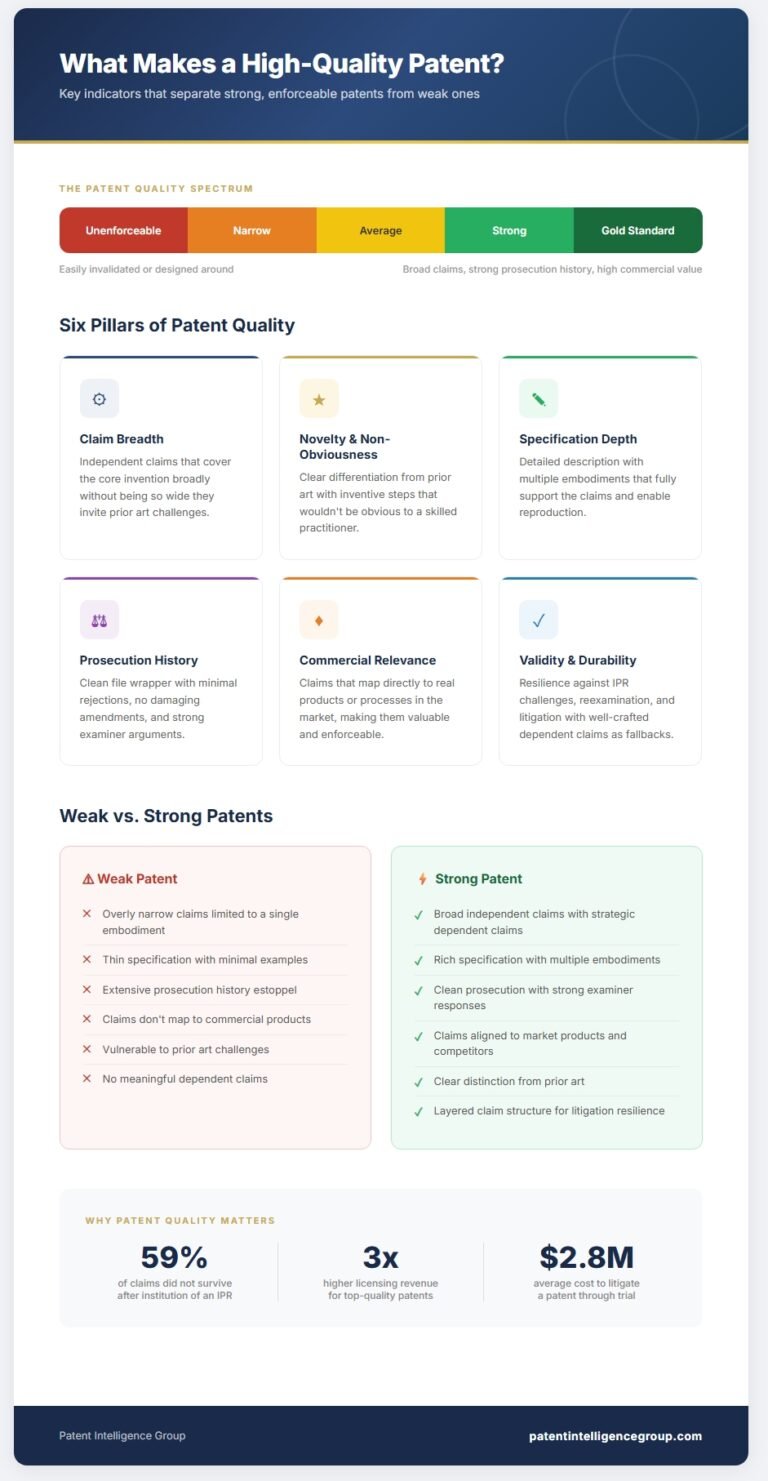
- Portfolio quality assessment measuring claim breadth and technical merit
- Competitive landscape analysis comparing IP positions
- Licensing agreements and revenue generation potential
- Prior art searches and invalidity risks
- Maintenance fee status and administrative compliance
Patent Intelligence Group specializes in this domain, conducting thorough IP due diligence assessments that reveal hidden risks and opportunities in patent portfolios. Their MoatWatch™ framework provides ongoing monitoring to protect investment value over time.
Operational Due Diligence
Operational reviews assess business processes, systems, and capabilities supporting value creation. This analysis evaluates management quality, organizational structure, supply chain resilience, and operational efficiency.
Investigators examine customer concentration risks, supplier dependencies, technology infrastructure, and production capabilities. Understanding due diligence what is in operational contexts means evaluating whether current operations can sustain projected growth and deliver promised returns.

Commercial Due Diligence
Market-focused investigations validate growth assumptions and competitive positioning. Commercial due diligence analyzes market size, customer dynamics, competitive threats, and strategic positioning.
This component addresses whether financial projections rest on realistic market assumptions. Analysts conduct customer interviews, competitive benchmarking, and market research to validate or challenge management’s growth thesis.
The Due Diligence Process Timeline
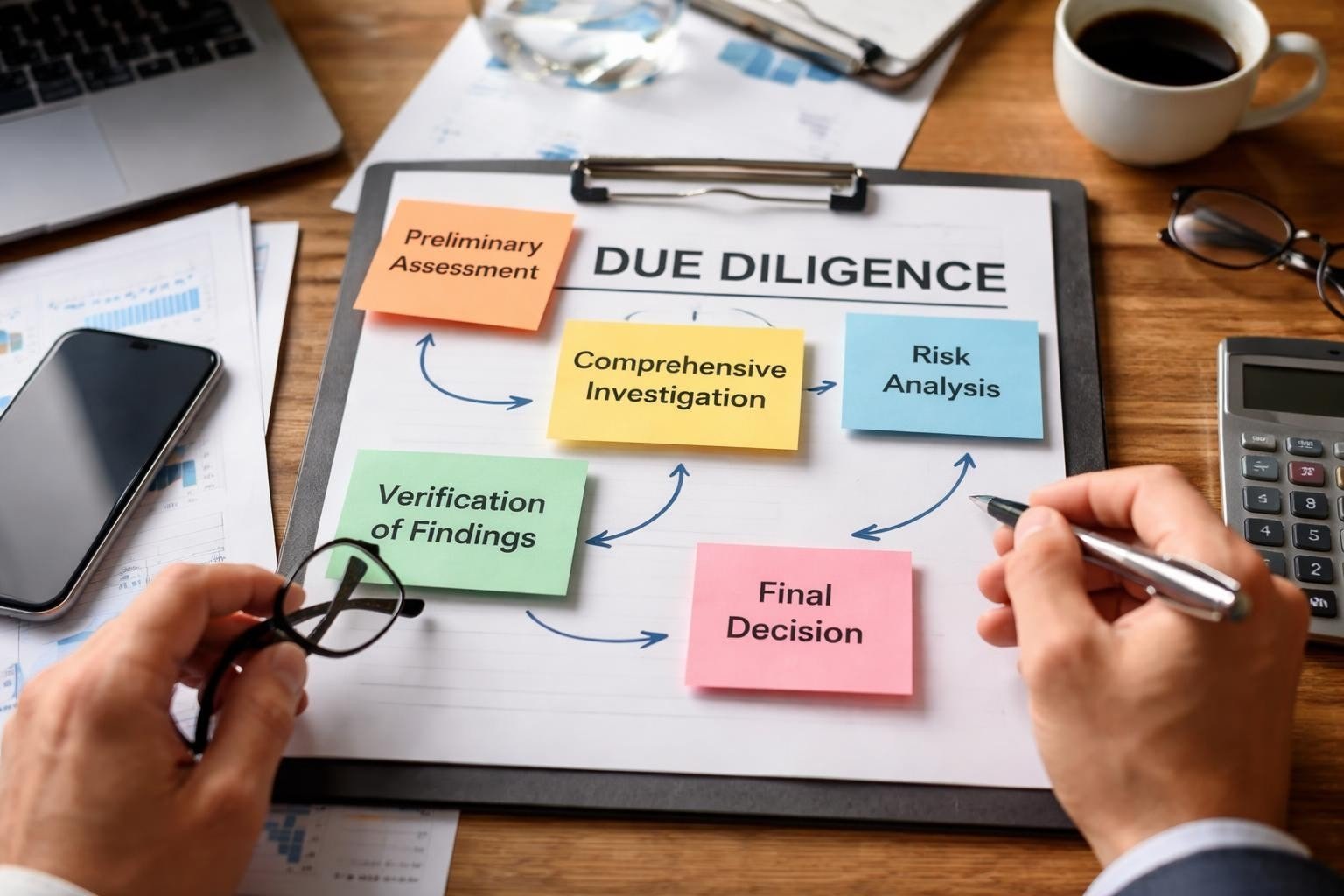
Answering due diligence what is also requires understanding how investigations unfold over time. Most processes follow a structured timeline with distinct phases.
Phase One: Preliminary Assessment
Initial evaluation occurs during early transaction discussions. Buyers review basic information such as executive summaries, historical financials, and organizational charts. This phase helps determine whether pursuing full due diligence makes strategic sense.
Preliminary assessment typically requires one to two weeks. Teams identify major red flags that might terminate discussions before significant resource investment.
Phase Two: Comprehensive Investigation
Full due diligence begins after signing non-disclosure agreements and receiving access to data rooms. Cross-functional teams conduct detailed analyses across financial, legal, operational, and specialized domains.
Timeline considerations:
- Small transactions: 30-45 days
- Middle-market deals: 60-90 days
- Large, complex acquisitions: 90-120+ days
- Patent portfolio reviews: 45-60 days depending on size
This phase generates detailed findings reports, risk matrices, and valuation adjustments. Teams conduct management presentations, site visits, and expert consultations.
Phase Three: Issue Resolution and Negotiation
Investigation findings inform purchase price adjustments, deal structure modifications, and contractual representations. Buyers request seller remediation of identified issues or negotiate price reductions reflecting discovered risks.
Understanding what due diligence entails means recognizing this negotiation dynamic. Findings don’t automatically kill deals but rather inform more balanced risk allocation through contract terms.
Common Pitfalls and Best Practices
Even experienced investors make due diligence mistakes that compromise transaction outcomes. Recognizing these pitfalls helps teams conduct more effective investigations.
Insufficient Scope Definition
Failing to tailor due diligence scope to transaction-specific risks wastes resources on irrelevant areas while missing critical issues. Patent-heavy technology acquisitions require extensive IP review, while asset-light service businesses need deeper customer and employee analysis.
Best practice: Develop risk-based due diligence plans addressing industry-specific concerns, transaction structure implications, and strategic objectives.
Confirmation Bias
Teams sometimes conduct investigations seeking evidence supporting predetermined conclusions rather than objectively evaluating all findings. This bias prevents identification of deal-breaking issues until too late.
Effective due diligence maintains healthy skepticism. Question management assertions, verify representations independently, and explore alternative explanations for positive trends.
Resource Constraints
| Resource Challenge | Impact | Mitigation Strategy |
|---|---|---|
| Insufficient time | Incomplete investigation, missed risks | Prioritize high-risk areas, extend timelines |
| Limited budget | Superficial analysis, inadequate expertise | Focus resources on material issues |
| Inadequate expertise | Poor quality findings, misinterpretation | Engage specialized advisors early |
| Data access restrictions | Information gaps, unverified claims | Negotiate comprehensive data room access |
Understanding due diligence what is means allocating sufficient resources for thorough investigation. Cutting corners on critical analysis saves money initially but risks substantially larger losses later.
Documentation and Communication Gaps
Poor documentation undermines due diligence value. Teams should maintain detailed records of information reviewed, findings identified, and conclusions reached. This documentation supports post-closing integration, resolves disputes, and demonstrates reasonable investigation efforts.
Communication failures between functional teams create dangerous blind spots. Regular cross-functional meetings ensure financial analysts understand legal risks, while attorneys appreciate operational concerns.
Industry-Specific Considerations
Different industries present unique due diligence challenges requiring specialized approaches. Recognizing these variations ensures comprehensive risk assessment.
Technology and Software Companies
Technology due diligence extends beyond financial metrics to evaluate code quality, technical debt, scalability architecture, and cybersecurity vulnerabilities. Intellectual property analysis becomes paramount, examining patent coverage.
Customer concentration and recurring revenue quality receive enhanced scrutiny. Teams assess churn rates, net retention metrics, and customer acquisition economics that traditional industries don’t emphasize.

Private Equity and Venture Capital
Investment fund due diligence examines management teams, portfolio companies, fee structures, and historical performance. Limited partners conduct operational due diligence assessing fund infrastructure, compliance programs, and investment processes.
For litigation finance investments, specialized due diligence evaluates case merits, damages calculations, and patent enforceability. These assessments require deep legal and technical expertise that Patent Intelligence Group provides through independent patent intelligence services.
Leveraging Technology in Modern Due Diligence
Technology transformation reshapes how professionals conduct due diligence investigations. Understanding due diligence what is in 2026 requires appreciating these technological capabilities.
Virtual Data Rooms
Cloud-based data rooms replaced physical document review facilities, enabling global teams to access materials simultaneously. Modern platforms provide granular access controls, audit trails, and advanced search capabilities that accelerate information discovery.
Key virtual data room features:
- AI-powered document classification and indexing
- Redaction tools protecting sensitive information
- Q&A tracking managing information requests
- Analytics dashboards monitoring user activity
- Integration with collaboration tools
Artificial Intelligence and Analytics
Machine learning algorithms analyze financial statements for anomalies, review contracts for concerning provisions, and assess patent portfolios for quality indicators. Natural language processing extracts key terms from thousands of documents, while predictive analytics identify risk patterns.
However, technology complements rather than replaces human judgment. Experienced professionals interpret algorithmic findings, validate conclusions, and exercise contextual judgment that automation cannot replicate.
Specialized Due Diligence Software
Industry-specific platforms streamline investigations in particular domains. Patent analytics tools map competitive landscapes, assess citation networks, and evaluate claim quality. Financial analysis software automates ratio calculations, trend analysis, and peer comparisons.
These specialized tools enhance efficiency but require expert interpretation. Understanding underlying methodologies, data limitations, and analytical assumptions remains essential for drawing valid conclusions.
Regulatory and Compliance Dimensions
Due diligence encompasses significant regulatory compliance responsibilities. Various legal frameworks mandate specific investigation standards in different contexts.
Securities Law Requirements
Public company acquisitions and securities offerings face regulatory due diligence requirements. Legal definitions of due diligence in securities contexts establish liability shields for underwriters and directors demonstrating reasonable investigation efforts.
Section 11 of the Securities Act creates affirmative defense for those conducting appropriate due diligence before registration statements. This standard influences investigation depth and documentation practices.
Anti-Money Laundering and KYC
Financial institutions conduct customer due diligence verifying identity, assessing risk profiles, and monitoring transactions for suspicious activity. Enhanced due diligence applies to high-risk customers, politically exposed persons, and correspondent banking relationships.
These compliance-driven investigations differ from transactional due diligence but share common investigation methodologies and documentation standards.
Red Flags That Demand Deeper Investigation
Experienced investigators recognize warning signs indicating potentially serious issues warranting expanded analysis. Understanding due diligence what is means developing instincts for these red flags.
Critical warning indicators include:
- Inconsistent or changing explanations from management
- Reluctance providing requested information or excessive delays
- Accounting policies aggressive relative to industry norms
- Significant related-party transactions lacking clear business rationale
- Customer or supplier concentration exceeding 20-30% thresholds
- High executive or board turnover without clear succession planning
- Pending or threatened litigation involving core business operations
- Regulatory inquiries or enforcement actions
- Declining margins despite revenue growth
- Patent portfolios concentrated in expiring or weak patents
None of these flags automatically disqualify transactions, but each demands thorough investigation understanding root causes and potential impacts. Experienced teams pursue these issues relentlessly until satisfied with explanations or appropriately pricing discovered risks.
Integration Planning During Due Diligence
Smart acquirers use due diligence not just for risk identification but also for integration planning. This forward-looking perspective maximizes post-closing value creation.
Due diligence teams identify key personnel requiring retention, critical systems needing integration or replacement, and cultural differences affecting combination success. Early identification of integration challenges allows proactive planning rather than reactive problem-solving.
Understanding due diligence what is from this perspective transforms investigations from mere risk assessment into strategic planning exercises. The same analysis identifying risks also reveals opportunities for operational improvements, cost synergies, and revenue enhancements.
Thorough due diligence represents the cornerstone of successful investment decisions, protecting capital while identifying opportunities that superficial analysis might miss. For private equity firms, litigation finance funds, and investors evaluating patent-intensive opportunities, specialized intellectual property due diligence proves particularly critical. Patent Intelligence Group delivers independent patent intelligence services that reveal the true strength and risks within patent portfolios, helping clients make confident investment decisions backed by comprehensive technical and legal analysis.