Due Diligence. What It Is: A Complete Guide for Investors
Understanding due diligence what is and why it matters. Learn the essential components, types, and best practices for thorough investment reviews.

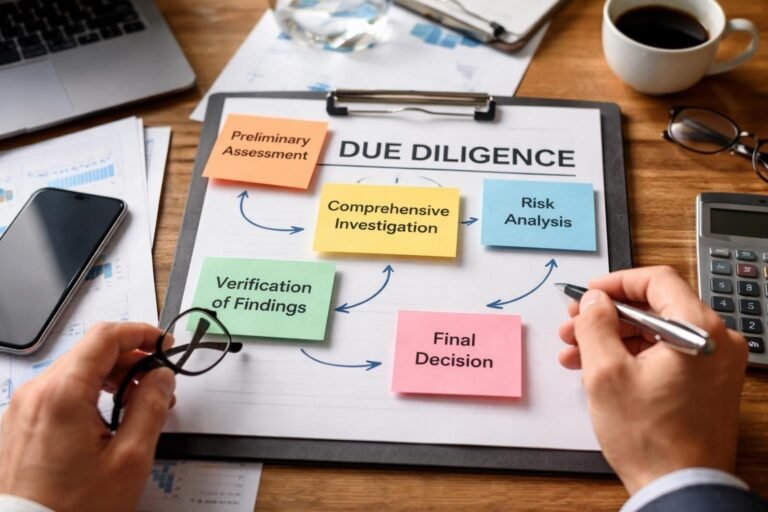
Understanding due diligence what is and why it matters. Learn the essential components, types, and best practices for thorough investment reviews.
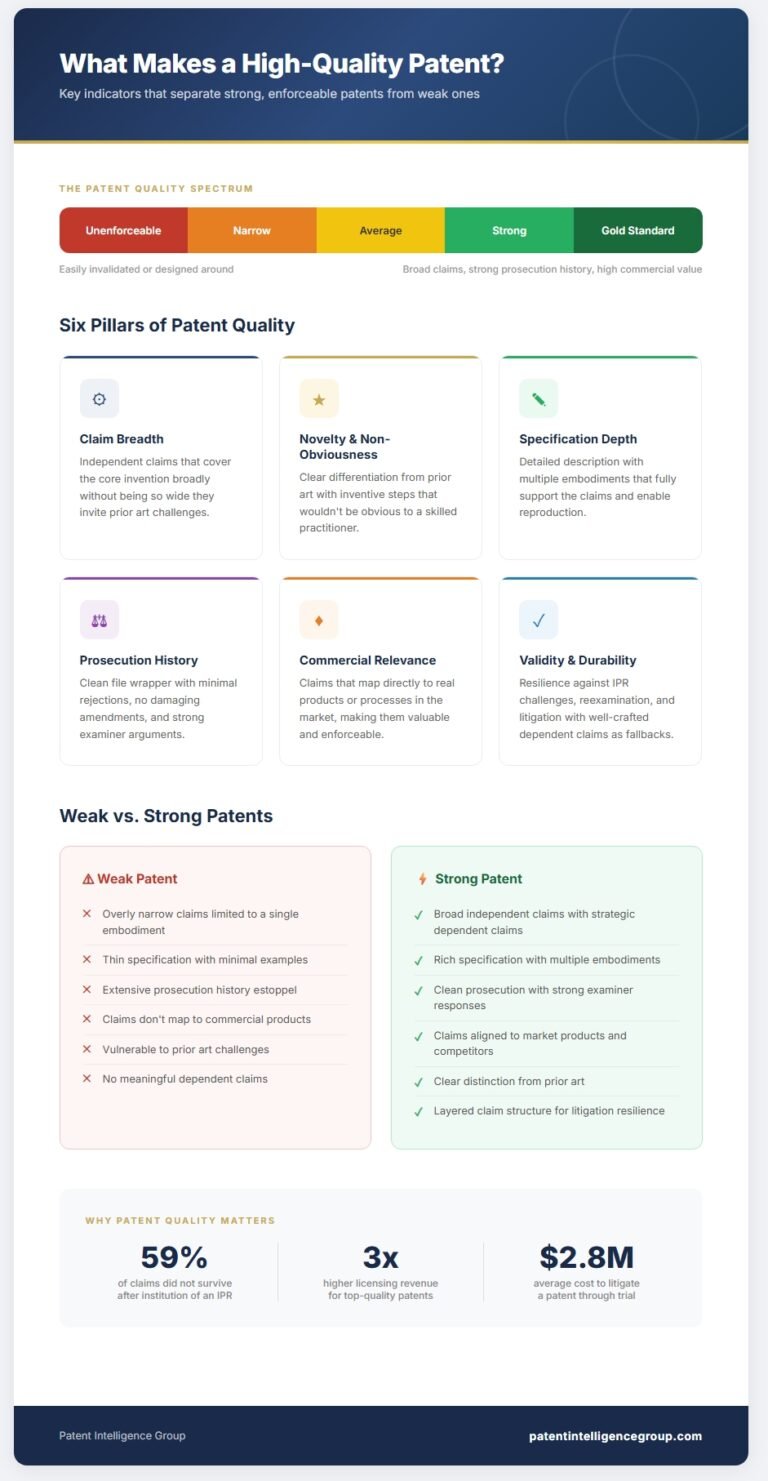
You would never close an acquisition without a Quality of Earnings report. The idea of relying on the target’s own financials — without an independent third party stress-testing the numbers — would be unthinkable. No investment committee would approve it. No lender would fund it. So why does almost every PE firm do exactly that…
Most IP diligence on PE deals is just a paperwork check. Independent patent diligence answers the questions that actually matter before you commit capital.
Understanding which firms provide patent litigation funding and how they assess infringement evidence, damages potential, and litigation risk — before a case reaches their investment committee.
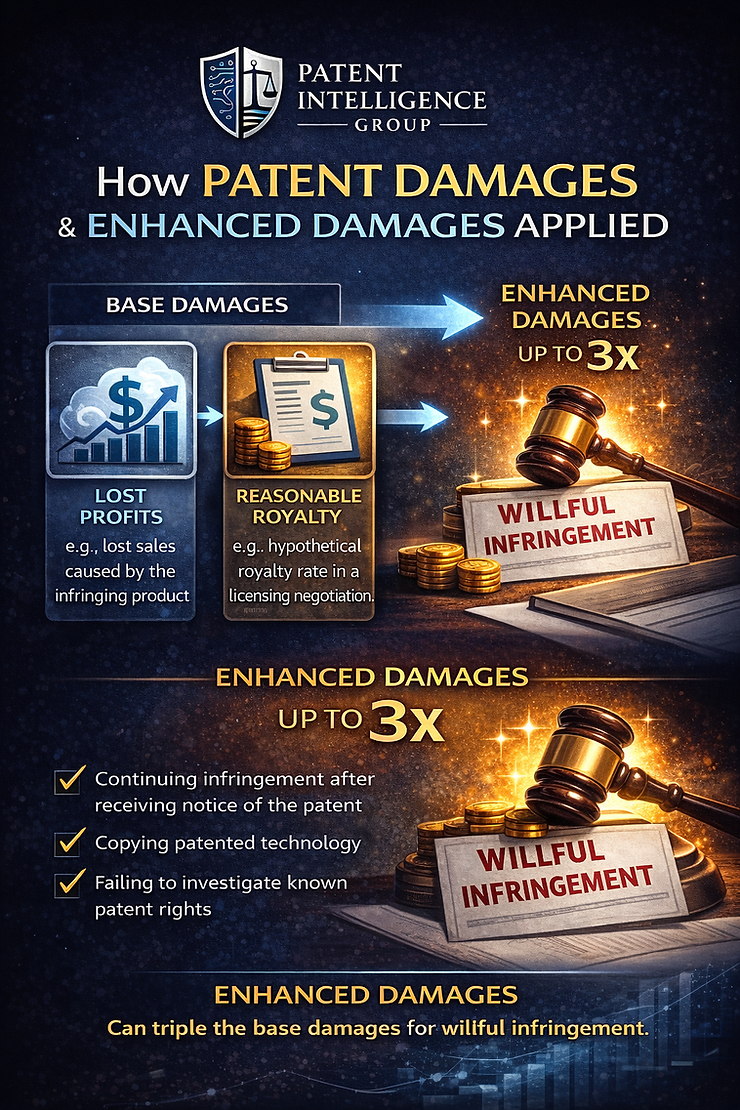
Courts must determine how much compensation the patent owner is entitled to receive. Learn how reasonable royalty and lost profits are calculated — and when willful infringement can triple the award.
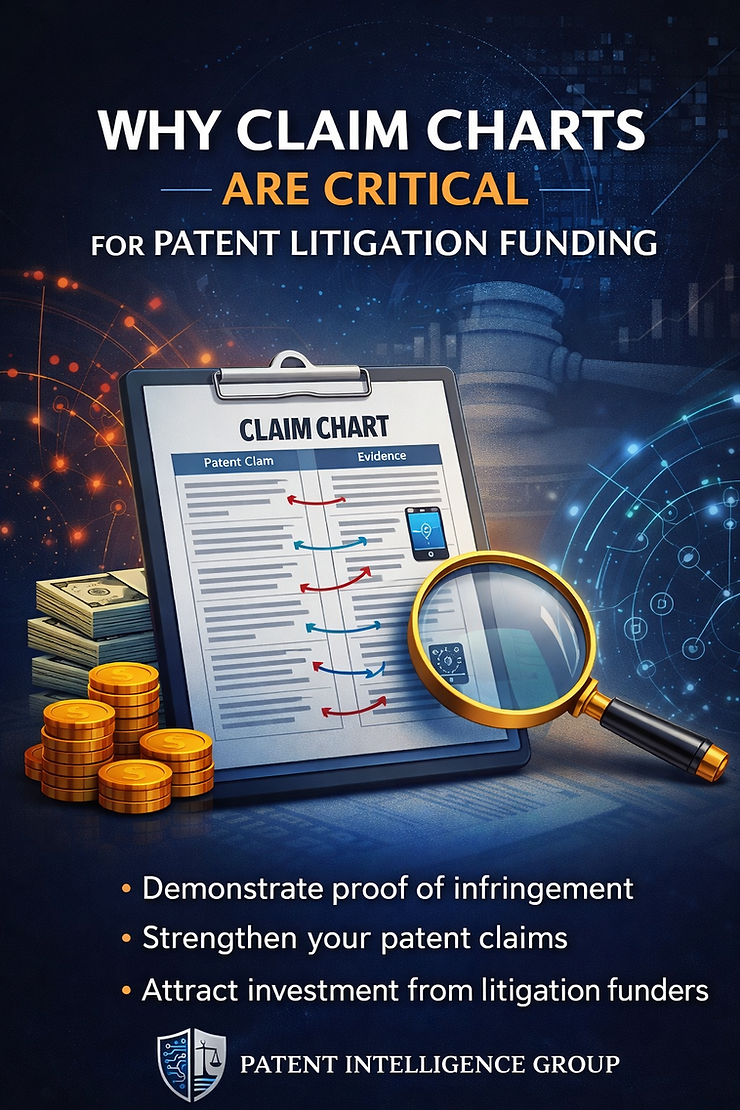
Claim charts map the elements of a patent claim to features of an accused product, providing structured proof of infringement. They are often essential when seeking patent litigation funding.

AI surfaces patterns, risks, and signals across claims, prior art, and prosecution history — allowing human experts to focus on interpretation rather than manual review.
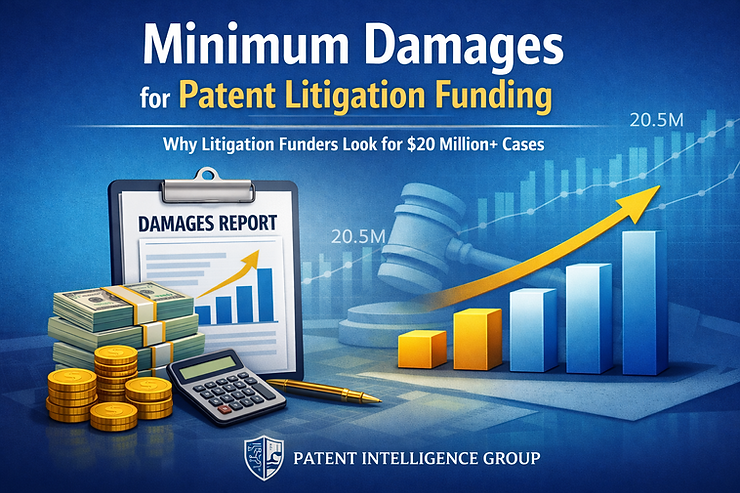
Most litigation finance firms look for cases where estimated damages exceed $20 million. Understanding this threshold helps determine whether a case may qualify for investor review.
Litigation finance firms evaluate cases based on infringement evidence, patent strength, damages potential, and litigation risk. Here’s what structured diligence looks like before approaching investors.

Funders are highly selective and only invest in cases with strong patents, clear infringement, and meaningful damages. Understanding what they evaluate can significantly improve case preparation.