
Operations Private Equity: Value Creation Strategies
The landscape of private equity investing has fundamentally shifted over the past decade. While financial engineering and leverage optimization once dominated value creation strategies, today's leading firms recognize that sustainable returns come from operational excellence. Operations private equity represents a disciplined approach where firms actively engage with portfolio companies to drive performance improvements, streamline processes, and build long-term competitive advantages. This operational focus has become essential as multiples remain elevated and traditional financial arbitrage opportunities diminish across most sectors.
The Evolution of Operational Value Creation
Private equity firms have transformed from passive financial sponsors into active operational partners. This evolution reflects market realities where improving operations is the greatest source of value for modern portfolio companies. The shift occurred gradually as firms recognized that sustainable EBITDA growth requires more than cost-cutting and multiple expansion.
Operations private equity encompasses a comprehensive approach to value creation that includes:
- Process optimization across manufacturing, supply chain, and service delivery
- Technology deployment to enhance productivity and enable scalability
- Talent acquisition and development to build high-performing leadership teams
- Commercial excellence through pricing optimization and customer segmentation
- Digital transformation initiatives that modernize legacy business models
The most successful firms have built dedicated operational teams with deep industry expertise. These professionals work alongside portfolio company management to identify improvement opportunities, implement best practices, and accelerate growth initiatives. Unlike traditional consulting engagements, operations private equity teams maintain ongoing involvement throughout the investment hold period.

Building Operational Capabilities
Establishing robust operational capabilities requires significant investment in people and processes. Leading operations private equity firms employ former executives, operators, and industry specialists who understand sector-specific challenges. These teams conduct comprehensive operational due diligence before acquisitions and develop detailed value creation plans within the first 100 days of ownership.
The operational due diligence process examines organizational structure, manufacturing efficiency, IT infrastructure, supply chain resilience, and human capital. This assessment identifies both risks and opportunities that financial analysis alone cannot reveal. According to comprehensive operational due diligence frameworks, thorough assessments significantly reduce post-acquisition surprises and enable faster implementation of improvement initiatives.
Intellectual Property as an Operational Asset
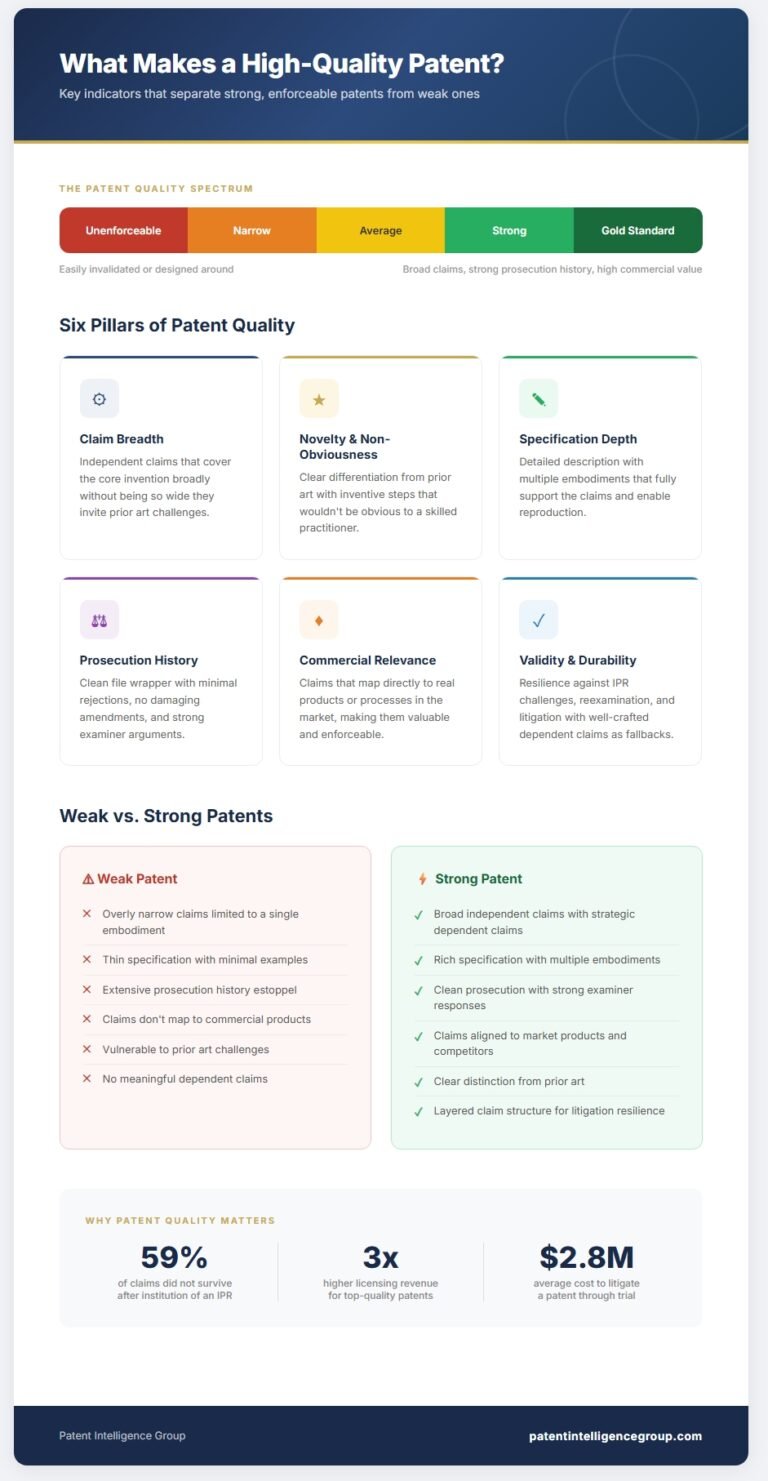
For technology-focused portfolio companies, intellectual property represents a critical operational asset that requires strategic management. Operations private equity teams increasingly recognize that patent portfolios, trade secrets, and proprietary technology create defensible market positions and enable premium pricing. However, many portfolio companies lack sophisticated IP strategies or adequate protection for their innovations.
Effective IP management within operations private equity encompasses several dimensions:
| IP Management Area | Operational Impact | Value Creation Opportunity |
|---|---|---|
| Patent Portfolio Optimization | Reduces maintenance costs, focuses resources | 15-30% cost savings on IP maintenance |
| Freedom-to-Operate Analysis | Mitigates litigation risk, enables product launches | Prevents costly product delays and litigation |
| Licensing Strategy | Generates non-dilutive revenue | 5-10% EBITDA improvement potential |
| Trade Secret Protection | Preserves competitive advantages | Maintains market leadership position |
Independent investment due diligence providers help operations private equity teams assess IP quality and competitive positioning. This specialized analysis identifies patent strength, potential infringement issues, and opportunities to monetize underutilized assets. The insights inform both acquisition decisions and post-close operational strategies.
Patent Intelligence Integration
Forward-thinking operations private equity firms integrate patent intelligence into ongoing portfolio monitoring. This continuous surveillance tracks competitor patent filings, identifies emerging technology threats, and uncovers whitespace opportunities for innovation. Regular patent landscape updates enable portfolio companies to adjust R&D priorities and maintain technological leadership.
The MoatWatch™ approach to ongoing patent monitoring provides operations teams with quarterly updates on competitive dynamics. This systematic tracking reveals when competitors file patents in adjacent spaces, when key patents approach expiration, and when acquisition targets become available. Such intelligence directly informs operational decisions about product development, market entry, and strategic partnerships.
Technology Enablement and Digital Transformation
Operations private equity extends beyond traditional process improvements to encompass comprehensive digital transformation. Modern portfolio companies must leverage technology to compete effectively, whether through advanced analytics, automation, cloud infrastructure, or artificial intelligence applications. The challenge lies in prioritizing technology investments that deliver measurable returns without creating technical debt or organizational disruption.
Successful technology enablement follows a structured approach:
- Assessment of current state including legacy systems, technical capabilities, and digital maturity
- Identification of high-impact opportunities where technology can drive revenue or reduce costs
- Development of technology roadmap aligned with business strategy and capital constraints
- Phased implementation with clear milestones and performance metrics
- Change management to ensure adoption and maximize value realization
According to insights from Deloitte on private equity operations, technology infrastructure decisions made early in the ownership period significantly impact operational scalability and exit valuations. Operations private equity teams must balance immediate efficiency gains with long-term platform capabilities that support growth.

Data-Driven Decision Making
Operations private equity firms increasingly emphasize data analytics as a competitive advantage. Portfolio companies that leverage data effectively make better pricing decisions, optimize inventory levels, predict customer churn, and allocate resources efficiently. Building analytical capabilities requires investment in data infrastructure, talent acquisition, and cultural change.
The analytics maturity journey typically progresses through stages: descriptive reporting, diagnostic analysis, predictive modeling, and prescriptive optimization. Most portfolio companies begin with basic reporting and gradually develop more sophisticated capabilities as data quality improves and analytical talent joins the organization. Operations teams accelerate this progression by sharing best practices across portfolio companies and providing access to specialized resources.
Commercial Excellence and Revenue Optimization
While cost reduction generates immediate EBITDA improvements, operations private equity increasingly focuses on revenue enhancement as a sustainable value driver. Commercial excellence initiatives optimize pricing, improve sales effectiveness, enhance customer segmentation, and develop new revenue streams. These initiatives typically deliver higher returns than cost-cutting while positioning companies for long-term growth.
Revenue optimization encompasses multiple levers:
- Pricing analytics to identify underpriced products and customers willing to pay premium prices
- Sales force effectiveness through training, compensation alignment, and territory optimization
- Customer segmentation to tailor offerings and service levels to different buyer profiles
- Channel strategy optimization across direct sales, distribution partners, and digital channels
- Product portfolio management to prune unprofitable SKUs and focus on high-margin offerings
Brookfield's research on private equity operational improvements demonstrates that revenue-focused initiatives create more sustainable value than pure cost reduction. Operations private equity teams that excel at commercial optimization typically achieve 20-30% EBITDA margin expansion over the hold period.
Customer Lifetime Value Enhancement
Sophisticated operations private equity firms recognize that increasing customer lifetime value drives enterprise value more effectively than constant customer acquisition. This perspective shifts operational focus toward retention, cross-selling, upselling, and service quality improvements. Portfolio companies that reduce churn by even a few percentage points often see significant valuation impacts.
Customer analytics reveal which segments generate disproportionate value, which products drive retention, and where service improvements would enhance loyalty. Operations teams use these insights to redesign onboarding processes, implement customer success programs, and develop targeted retention offers. The data-driven approach ensures resources flow toward initiatives with measurable returns.
Supply Chain Resilience and Working Capital
Recent global disruptions have elevated supply chain management within operations private equity priorities. Portfolio companies with resilient supply chains maintained operations during shortages while competitors faced shutdowns and lost revenue. This operational capability directly translates to enterprise value as buyers increasingly discount companies with concentrated supplier bases or fragile logistics networks.
Operations private equity teams address supply chain risks through several mechanisms:
| Risk Area | Mitigation Strategy | Operational Benefit |
|---|---|---|
| Supplier concentration | Multi-sourcing and dual qualification | Reduces disruption risk by 40-60% |
| Geographic concentration | Regional diversification | Maintains operations during localized disruptions |
| Inventory optimization | Safety stock modeling and demand forecasting | Balances service levels with capital efficiency |
| Logistics flexibility | Multi-modal capabilities and carrier relationships | Reduces freight costs by 15-25% |
Working capital optimization represents another critical focus area where operational improvements directly enhance returns. How New York investors approach portfolio management often includes dedicated working capital initiatives that free cash for growth investments or debt reduction. Reducing days sales outstanding, optimizing inventory turns, and extending payables within supplier relationship constraints can generate millions in cash flow improvements.

Organizational Development and Leadership
Operations private equity recognizes that sustainable improvements require strong leadership and capable organizations. Many portfolio companies suffer from talent gaps, unclear accountability, ineffective incentive structures, and weak management systems. Addressing these organizational issues often unlocks more value than process improvements alone.
The organizational development agenda includes:
- Leadership assessment and development to identify high-potential leaders and address capability gaps
- Organizational design to clarify roles, eliminate redundancies, and establish accountability
- Compensation alignment ensuring incentives drive desired behaviors and outcomes
- Culture development to foster performance orientation, innovation, and customer focus
- Succession planning to reduce key person risk and build leadership bench strength
According to Bain’s sector strategy insights, firms that invest in organizational capabilities achieve 25-35% higher returns than peers focused solely on financial engineering. Operations teams facilitate this development through executive coaching, peer learning forums, and access to functional experts.
Talent Acquisition and Retention
High-performing teams drive operational excellence, yet many portfolio companies struggle to attract and retain top talent. Operations private equity firms address this challenge by enhancing employer brands, upgrading compensation programs, improving workplace culture, and creating development opportunities. These initiatives reduce turnover costs while improving organizational capabilities.
Retention strategies prove particularly important for technology companies where specialized knowledge resides with individual contributors. Understanding how patent litigation funding firms evaluate patent cases illustrates the importance of retaining inventors and technical experts who can explain complex innovations. Operations teams implement retention programs, knowledge transfer processes, and succession planning to protect this valuable human capital.
Measuring Operational Performance
Effective operations private equity requires rigorous performance measurement aligned with value creation priorities. Leading firms establish key performance indicators across financial metrics, operational measures, and strategic milestones. These dashboards provide early warning of issues while tracking progress toward improvement targets.
Comprehensive performance measurement includes:
- Financial metrics: Revenue growth, EBITDA margin, cash conversion, return on invested capital
- Operational KPIs: Productivity rates, quality metrics, cycle times, capacity utilization
- Customer indicators: Net promoter score, retention rate, customer acquisition cost, lifetime value
- Innovation measures: Patent applications, new product revenue, R&D efficiency
- Employee metrics: Turnover rates, engagement scores, safety incidents, span of control
Operations teams review these metrics monthly with portfolio company management, identifying variances from plan and adjusting initiatives accordingly. The discipline of measurement drives accountability while providing objective evidence of value creation. This data proves essential during exit processes as it demonstrates operational momentum and sustainable improvements.
Benchmarking and Best Practice Sharing
Leading operations private equity firms leverage their portfolio scale to benchmark performance and share best practices. Companies can compare their metrics against peer portfolio companies in similar industries, identifying performance gaps and improvement opportunities. This cross-portfolio learning accelerates value creation as innovations diffuse rapidly across the platform.
Structured best practice sharing occurs through regular operator forums, working groups focused on specific functions, and curated playbooks documenting proven approaches. Portfolio company leaders gain exposure to tactics that succeeded elsewhere while avoiding failed experiments. This knowledge transfer capability represents a competitive advantage that standalone companies cannot replicate. Insights from Accenture on operational value creation emphasize how managed services and shared platforms enable this collaborative approach.
Due Diligence and Post-Acquisition Integration
Operations private equity begins before deal closure with thorough operational due diligence that identifies both risks and opportunities. This assessment examines manufacturing efficiency, IT systems, sales processes, supply chain resilience, and organizational capabilities. The findings inform valuation decisions and shape the post-acquisition value creation plan.
Effective operational due diligence reveals issues that financial analysis misses. Outdated technology infrastructure requiring major capital investment, key customer concentration creating revenue risk, or inadequate IP protection threatening competitive position all materially impact value. Understanding why claim charts are critical for patent litigation funding demonstrates how technical analysis uncovers hidden risks in technology portfolios.
Post-acquisition integration represents the critical phase where operational improvements translate into value. The first 100 days establish momentum, align leadership around priorities, and launch quick-win initiatives that build credibility. Operations private equity teams develop detailed integration playbooks covering communication, organizational design, process standardization, and system migration.
The Role of Independent Expertise
Many operations private equity firms supplement internal capabilities with independent experts who provide specialized knowledge. For intellectual property assessment, independent IP review services offer unbiased perspectives that deal counsel cannot provide due to inherent conflicts. This independence proves valuable when evaluating patent quality, freedom to operate, or technology differentiation.
Specialized providers bring depth in areas where generalist operations teams lack expertise. Patent intelligence, regulatory compliance, cybersecurity, environmental sustainability, and other technical domains benefit from dedicated specialists who understand industry nuances. Operations private equity firms that build networks of trusted advisors can rapidly deploy expertise when portfolio companies face specific challenges.
Operations private equity has emerged as the dominant value creation approach for portfolio companies across industries, with operational excellence now driving sustainable returns more effectively than financial engineering alone. The integration of patent intelligence and IP strategy within operational frameworks represents an increasingly important competitive advantage, particularly for technology-focused investments where intellectual property determines market position and defensibility. For private equity firms seeking independent assessment of patent portfolios, technology differentiation, or IP-related risks, Patent Intelligence Group provides specialized due diligence and ongoing monitoring services that support informed investment decisions and operational value creation throughout the hold period.